Skip to content
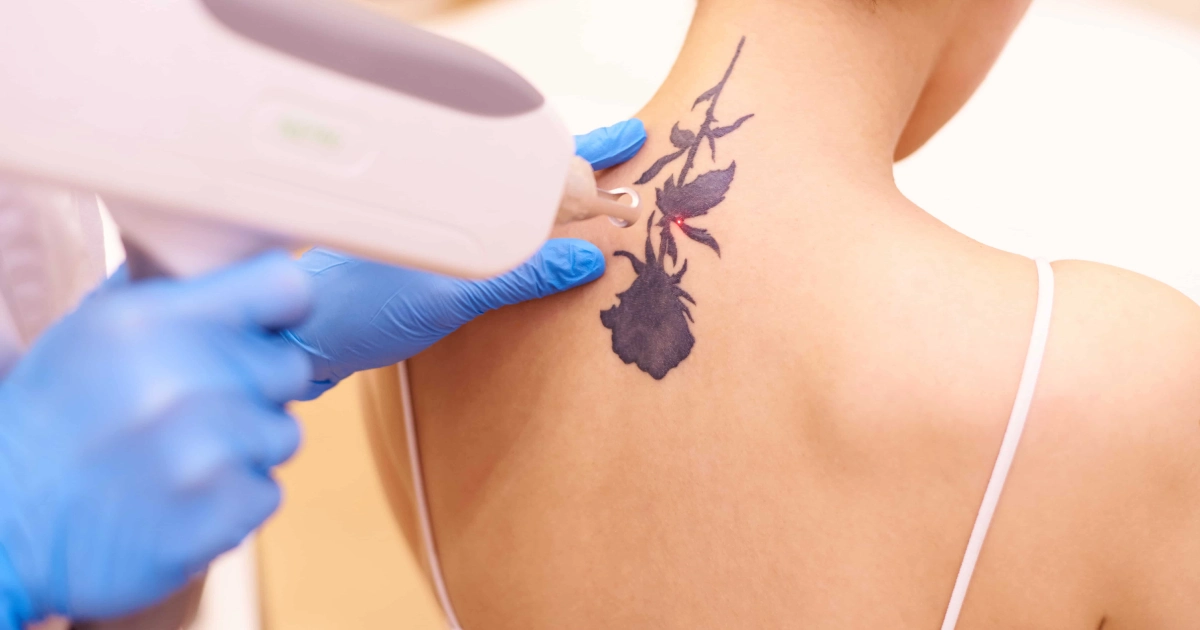
Table of Contents
Removing a tattoo is not just about fading a design. For many people, it is about feeling more like themselves again. If you are deciding between cover-up, removal, or lightening for a future piece, it helps to understand why some tattoos fade faster than others. At Laser Esthetica in Roseville, one of the most common questions we hear is why black ink often responds faster than color.
The short answer: different pigments absorb light differently, and laser tattoo removal works by matching the right wavelength and settings to the ink.
The Science Behind Laser Tattoo Removal
Tattoo ink sits in the dermis, below the surface of the skin. Your body recognizes that ink as a foreign substance, but it cannot fully clear it on its own because the pigment particles are too large.
Laser tattoo removal works by delivering very fast pulses of light into the ink. The pigment absorbs that energy, and the ink particles break into much smaller fragments. Over the following weeks, your immune system gradually clears those fragments away. That is why tattoos fade little by little, not instantly.
Why Black Ink Usually Fades Faster
Black ink tends to be the most responsive because it absorbs a wide range of light. It is also commonly treated with the 1064 nm wavelength, which penetrates deeply and is a strong match for darker pigments.
Black ink often responds well because:
- Strong absorption: black pigment takes in laser energy efficiently.
- Deeper reach: the wavelength commonly used for black ink can treat pigment that sits deeper in the skin.
- More even fading: black tattoos often lighten more consistently across the design.
That does not mean every black tattoo disappears quickly, but black ink is usually more predictable than mixed-color tattoos.
Why Colored Ink Can Take More Sessions
Color tattoos can be more complex because each color behaves differently under laser light. Some pigments absorb certain wavelengths well, while others reflect light or respond slowly.
A few common examples:
- Reds and oranges often respond to 532 nm.
- Greens, blues, and purples may require different wavelengths and careful setting adjustments.
- Light colors (especially very pale tones) can be more stubborn because they may not absorb laser energy as efficiently.
Color tattoos are also frequently layered. A piece may have multiple inks stacked for shading and depth, and those layers can sit at different skin depths. That is one reason why removal is usually a process, not a one-and-done treatment.
Why We Use The PiQo4 For Tattoo Removal
At Laser Esthetica, we use the PiQo4 laser platform for tattoo removal. One of the advantages of PiQo4 is that it gives us the flexibility to treat a wider range of ink colors using multiple wavelengths and ultra-fast pulse options.
In practical terms, that means we can:
- Match the wavelength to the ink color instead of relying on a single setting.
- Adjust pulse style and energy based on the tattoo’s density, depth, and your skin type.
- Customize each session as your tattoo fades and different pigments become more noticeable.
This matters because tattoo removal is rarely identical from one person to the next. Two tattoos can look similar on day one and respond very differently over the next few sessions.
What A PiQo4 Session Feels Like
Most people describe the sensation as a quick snap against the skin, similar to a rubber band. Comfort varies by location, tattoo size, and personal sensitivity.
A typical appointment looks like this:
- We review your tattoo, skin type, and goals, then confirm the plan for that session.
- The area is cleaned, and we use cooling measures to improve comfort.
- The PiQo4 is passed over the tattoo in controlled pulses.
- The treated skin may look slightly white or “frosted” right after, which usually settles quickly.
- You may have redness, warmth, or mild swelling afterward.
Most patients return to normal routines the same day, but aftercare still matters for healing and results.
Aftercare That Supports Better Healing
Laser tattoo removal is a controlled skin injury, so the way you treat the area afterward can influence irritation, recovery time, and the overall look of the skin between sessions.
We typically recommend:
- Keep the area clean and dry as directed.
- Avoid picking or scratching, even if the skin feels itchy.
- Limit heat and friction for a short period after treatment.
- Be strict about sun protection, especially in the weeks after a session.
We will give you specific instructions based on the treatment area and how your skin responds.
Comparing Black Ink And Color Ink Removal
Here is a simple way to think about the differences:
| Factor | Black Ink | Colored Ink |
| Absorption | Usually strong | Varies by pigment |
| Wavelength needs | Often 1064 nm | May require multiple wavelengths |
| Sessions | Often fewer | Often more |
| Fading pattern | More even | Can fade unevenly between colors |
| Planning | Straightforward | More customized |
Even when color is stubborn, the right settings and consistent session spacing can make a big difference.
Setting Realistic Expectations
The most accurate way to estimate your timeline is a consultation, but there are a few factors that commonly affect how quickly a tattoo fades:
- Professional vs. amateur: professional tattoos usually have more dense ink.
- Color mix: multiple pigments can mean more planning and more sessions.
- Tattoo age: older tattoos are often already partially broken down.
- Placement: areas with stronger circulation may fade faster for some people.
- Your immune response: your body does the clearing between sessions.
Most tattoos fade gradually over a series of sessions, spaced out to give your skin time to heal and your immune system time to do its work. Some colors may continue to lighten even after the skin looks fully healed.
Laser Tattoo Removal In Roseville At Laser Esthetica
Choosing a trained provider matters, especially when color is involved. PiQo4 is a powerful tool, but results still depend on proper assessment, safe settings, and a plan that respects your skin.
At Laser Esthetica, you can expect:
- A personalized treatment plan based on ink colors, tattoo depth, and skin type
- Clear guidance on what progress typically looks like session to session
- A focus on safety, comfort, and skin integrity, not rushing the process
Ready To Start Fading Your Tattoo?
If you are considering laser tattoo removal in Roseville, our team at Laser Esthetica can evaluate your tattoo, explain what to expect, and build a plan using the PiQo4 laser system. Schedule a consultation to talk through your goals and get a realistic session roadmap.